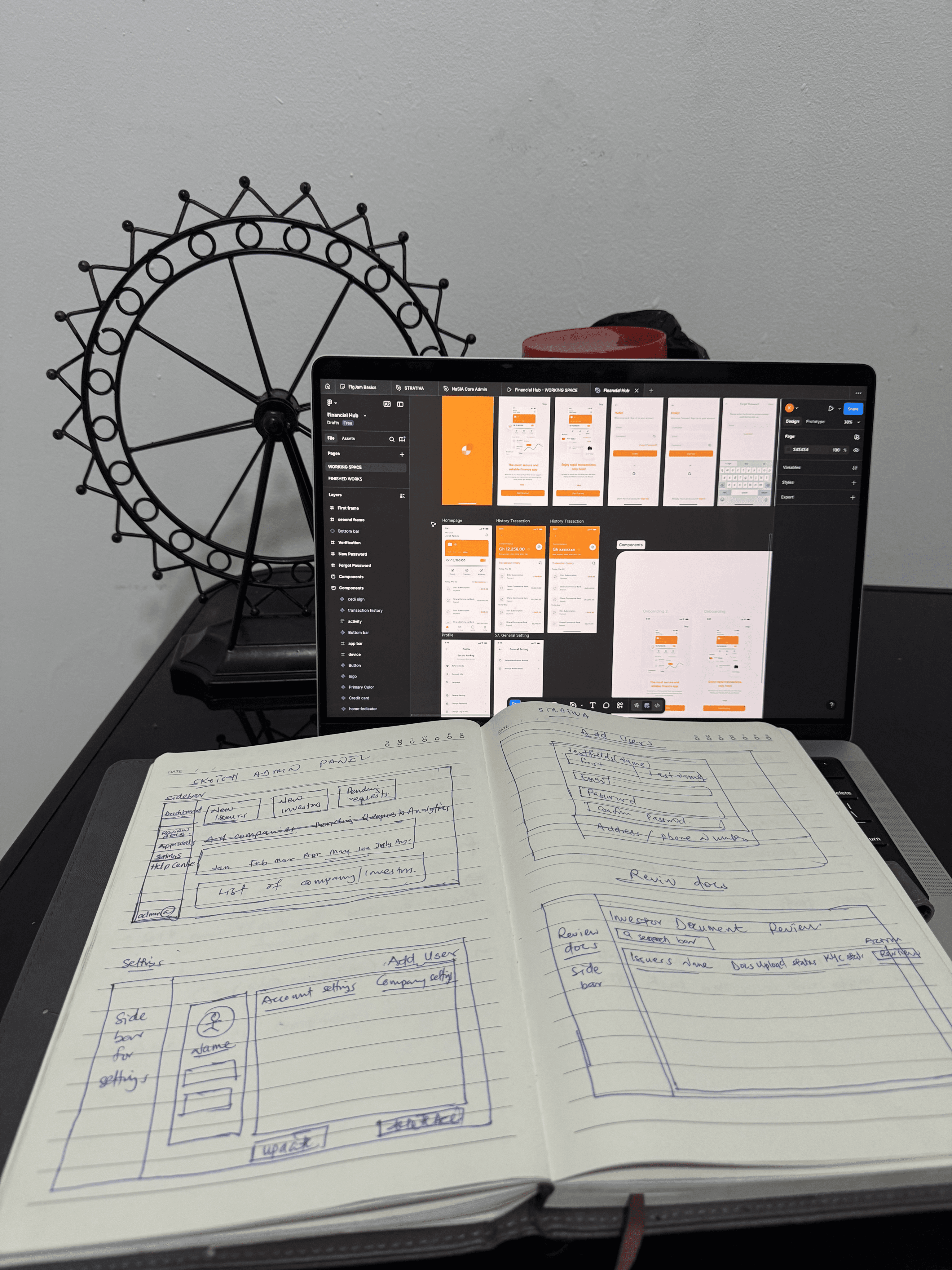
User testing ensures that designs work as intended. Let’s explore six aspects of this critical UX process.
1. User Research
Gather insights into users’ needs, behaviors, goals, and pain points through methods like interviews, surveys, observations, and analytics.
Takeaway: Understanding your users is the foundation of creating meaningful and relevant solutions.
2. Personas & User Scenarios
Develop realistic personas and scenarios that reflect key user types and their goals
Takeaway: Design decisions become more empathetic and targeted when based on real user contexts.
3. Information Architecture
Organize content and features in a logical and intuitive way that supports navigation and discoverability.
Takeaway: Clear structure reduces cognitive load and improves the overall user experience.
4. Prototyping
Create low to high-fidelity representations of the product to test ideas before development.
Takeaway: Prototypes allow for early feedback, faster iterations, and reduced development risk.
5. Usability Testing
Evaluate the design with real users to identify usability issues and uncover improvement areas.
Takeaway: Real user feedback reveals gaps that assumptions and internal reviews often miss.
Conclusion
User-centered design is not a one-time step it’s a continuous, evolving process that puts real people at the heart of every design decision. By investing in research, testing, and iterative improvements, teams can build products that are not only functional and feasible but truly resonate with users. The result? Solutions that drive satisfaction, engagement, and long-term success.